
nashi Team
5 min read

Revolut Business entered Singapore's merchant payments market with Tap to Pay on iPhone. It's a recognised global brand, and that carries weight. But for many Singapore merchants, it falls short where it counts.
The biggest issue: it's iOS only. That immediately locks out every Android user in Singapore. Add a $0.65 per-transaction fixed fee and no Amex support, and the gaps quickly add up.
This guide covers the top alternatives for merchants who need a better fit. Whether you're a pop-up seller, sole proprietor, or small business owner, one of these options likely serves you better.
What are the top alternatives to Revolut Business for Singapore merchants?
nashi is the most affordable Tap to Phone solution, built specifically for small businesses. HitPay is the most recognised local platform with the widest feature set. Stripe is the developer-friendly global pick.
FomoPay is the enterprise-grade gateway for merchants with higher transaction volumes. Grab offers strong rates for merchants serving the Grab consumer ecosystem.
Platform | Starting Price (SG cards) | Best For | Key Differentiator |
|---|---|---|---|
nashi | From 1.99% + $0.30 | Micro and small businesses | Lowest rates, no monthly fee, Amex support |
HitPay | From 2.8% + S$0.50 per transaction | E-commerce + in-person merchants | Most feature-complete local platform |
Stripe | 3.4% + $0.50 | Developer and tech-led businesses | Best-in-class API and e-commerce tools |
FomoPay | Custom | Higher-volume merchants | Enterprise gateway, MAS-regulated |
Grab | 2.50% (+ 9% GST) | Merchants in the Grab ecosystem | GrabPay wallet rate of 0.80% |
1. nashi: The simplest, most affordable Tap to Phone app
Disclosure: nashi is our own product. We've included it because we believe it genuinely belongs on this list, but you should know we're not a neutral party.
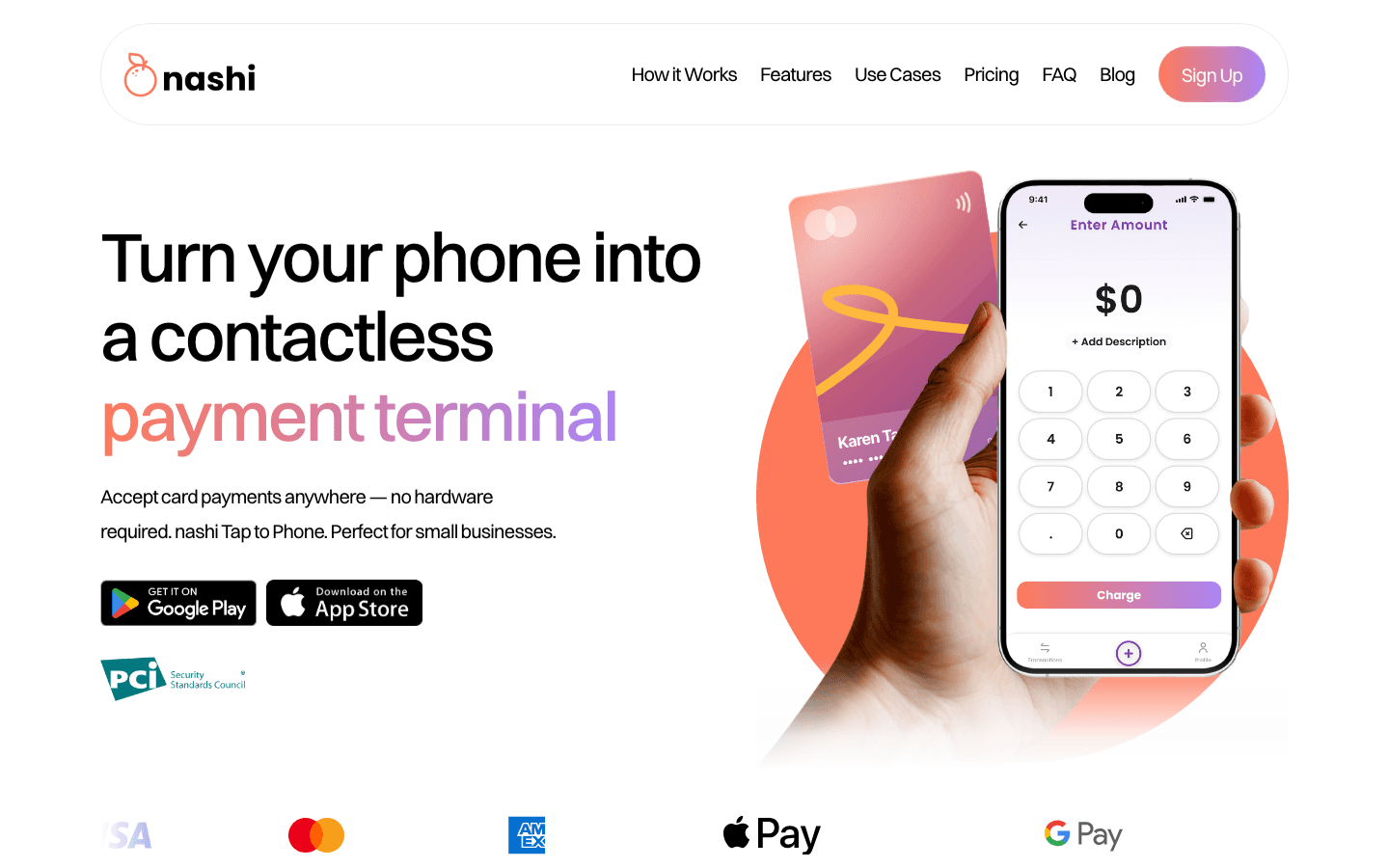
nashi is a Tap to Phone app built specifically for micro and small businesses in Singapore. It turns any NFC-enabled Android smartphone and iPhone (XS model or higher) into a card terminal. No hardware, no Bluetooth accessory, no monthly subscription.
Pricing starts from 1.99% + $0.30 for Singapore-issued Visa and Mastercard. That's the lowest starting rate in this comparison. nashi is also willing to discuss rates directly based on your industry and business stage.
The platform is powered by Adyen's payment infrastructure and is PCI-DSS compliant. Settlements reach your bank account within two business days. Refunds — full or partial — can be issued directly through the app.
Key features
Tap to Phone on Android and iOS (iPhone XS onwards)
Accepts Visa, Mastercard, and Amex
Fully digital KYC onboarding — no paperwork, typically approved in 1 business day
Automatic payouts to bank account in 2 business days
Full and partial refunds through the app
No hardware, no monthly fees, no lock-in contracts
Pricing
Singapore Visa / Mastercard: from 1.99% + $0.30 (for eligible segments)
Amex and international cards: 3.3% + $0.30
List pricing: 1.99% for businesses new to cards; 2.7% for all other categories
No setup fee, no monthly fee
Contact nashi directly to discuss pricing for your business
Pros & cons
Pros:
Lowest starting rate for Singapore card acceptance in this comparison
Accepts Amex — not supported by Revolut Business
No hardware investment or monthly subscription required
Fast digital onboarding, typically approved in one business day
Supports both Android and iOS
Cons:
Not a full POS — no inventory management or e-commerce features
Best rates require a direct conversation with the team
Customers
nashi is built for sole proprietors and small businesses with fewer than 10 employees. Early adopters include fragrance and skincare brands, personal trainers, make up atrists, private tutors, logistics providers, and pop-up stall operators. It was designed for businesses that want to start accepting cards fast, without paperwork or upfront hardware.
2. HitPay: Best for businesses that want more than card acceptance
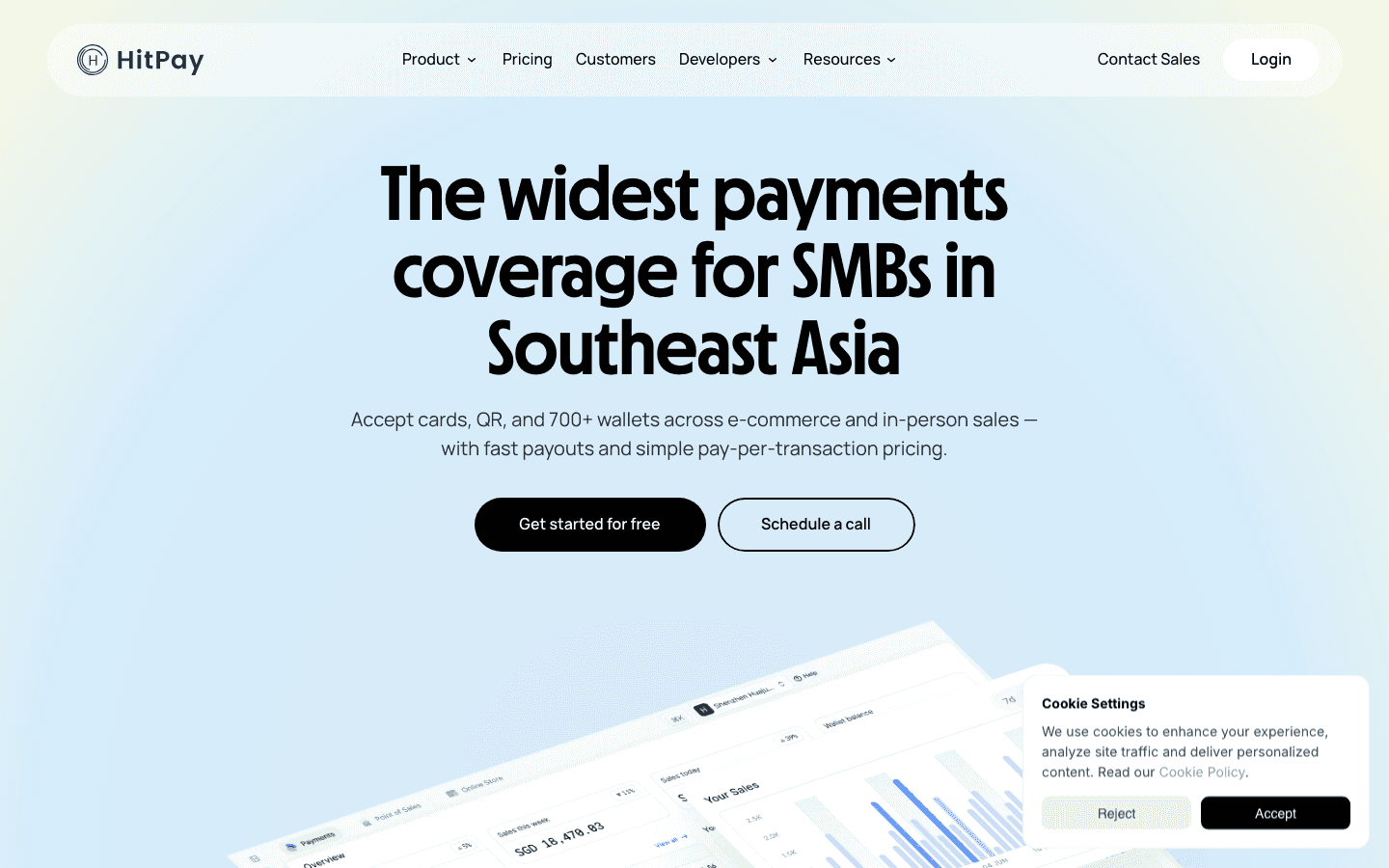
HitPay is the most widely used payment platform for small businesses in Singapore. It offers a full suite: Tap to Phone, payment links, e-commerce, invoicing, PayNow, and a website builder. If you want everything in one place, HitPay delivers.
Card rates are 2.5% for local Visa and Mastercard (minimum $0.20) and 3.20% for international cards. There's no setup fee or monthly subscription, and both Android and iOS are supported.
For merchants who only need in-person card acceptance, HitPay can feel overwhelming. Public reviews on Trustpilot flag onboarding delays, account holds without notice, and slow support. It's a strong platform — but one that works best when you use the full suite.
Key features
Tap to Phone on Android and iOS
Payment links, invoicing, e-commerce, PayNow, website builder
No setup or monthly fee
Accepts Visa, Mastercard, and Amex
Pricing
Singapore Visa / Mastercard: 2.5% (min $0.20)
Amex: 2.5% (min $0.20)
International Visa / Mastercard: 3.20%
No setup fee, no monthly fee
Pros & cons
Pros:
Most recognised local brand for small business payments in Singapore
Full payment suite across online and in-person channels
Accepts Amex at the same rate as other cards
Available on both iOS and Android
Cons:
Feature-heavy for merchants who only need card acceptance
Public reviews flag onboarding delays and account holds without warning
Custom rates only available at S$50,000+/month volumes
Support quality inconsistent based on Trustpilot and App Store reviews
Customers
HitPay is widely used by e-commerce brands that also sell in person — at pop-ups, markets, and dual-channel retail. It has built the strongest brand recognition among Singapore SMEs in this category.
3. Stripe: Best for developers and tech-savvy merchants
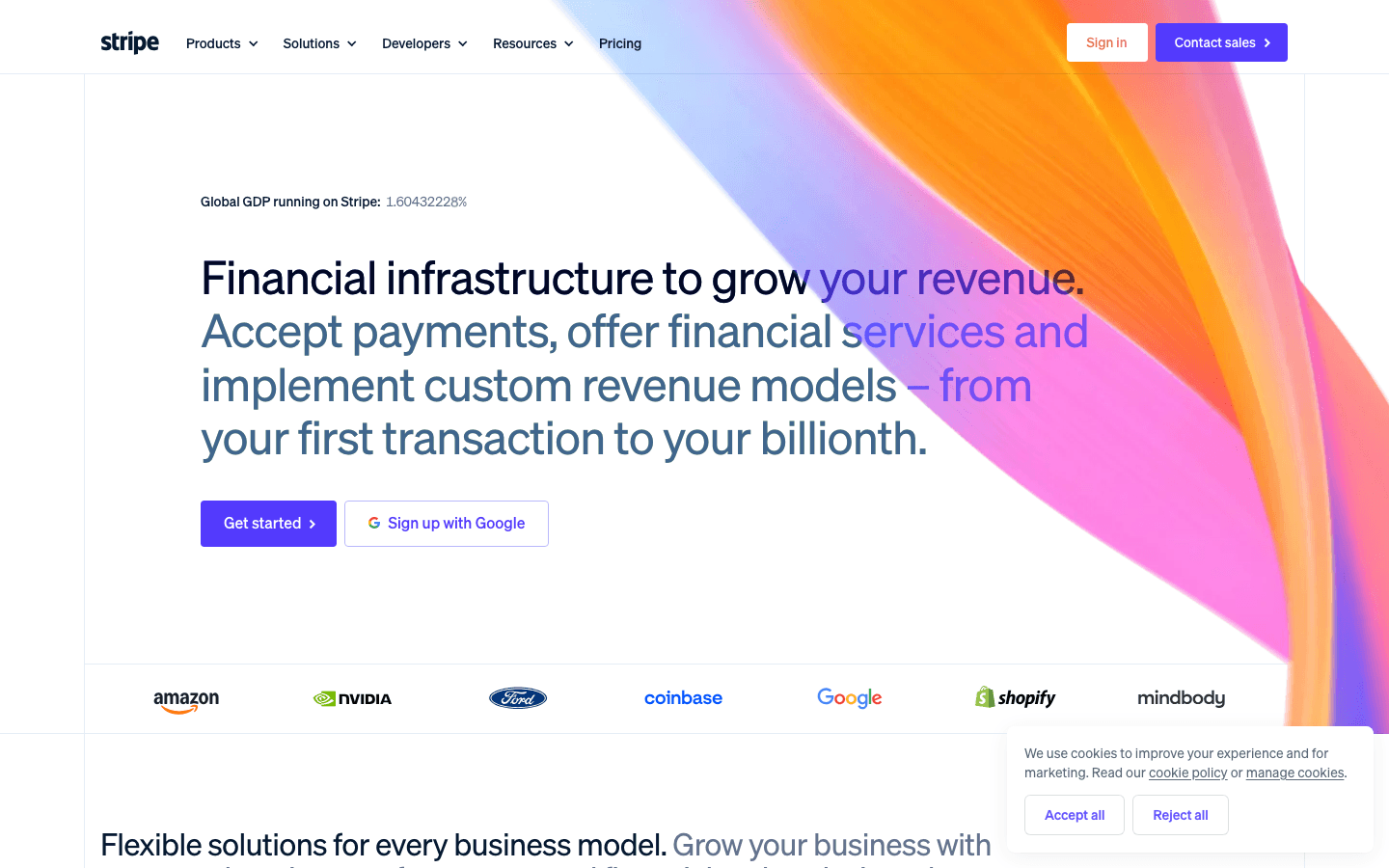
Stripe is the global standard for online payments and has Tap to Phone available in Singapore. It's trusted by millions of businesses worldwide, backed by deep developer documentation. For businesses already using Stripe online, extending to in-person requires no new account.
The tradeoff is cost. Singapore card rates are 3.4% + $0.50 — the most expensive in this comparison. International cards add another 0.50% on top.
For a Singapore micro-business that only needs in-person card acceptance, Stripe is likely overkill. But for tech-forward businesses running both online and in-person, it unifies everything cleanly.
Key features
Tap to Phone on Android and iOS
Powerful API for custom e-commerce and payment integrations
Transparent, published pricing
Supports PayNow (at a fee)
No setup or monthly fee
Pricing
Singapore Visa / Mastercard: 3.4% + $0.50
Amex: 3.4% + $0.50
International Visa / Mastercard: 3.9% + $0.50
No setup fee, no monthly fee
Pros & cons
Pros:
Excellent developer tools and documentation
Accepts Amex at the same rate as other cards
Transparent and published pricing
Available on both iOS and Android
Cons:
Most expensive per-transaction rate for Singapore domestic cards
Built for e-commerce — in-person is a secondary feature
No rate negotiation regardless of volume
Charges for PayNow — unlike using it directly through your bank
Customers
Stripe is used by tech-enabled businesses and startups across Singapore and globally. It's common among SaaS products, online retailers, and businesses that need custom payment flows built into apps or websites.
4. FomoPay: Best for higher-volume merchants needing a full gateway
FomoPay is a MAS-regulated payment institution based in Singapore. It offers FOMO SoftPOS — a Tap to Phone solution built in partnership with Mastercard. Beyond card acceptance, it covers PayNow, SGQR, and cross-border payment collection.
FomoPay is positioned at the enterprise end of the market. Pricing is custom and requires direct contact — no published rates. Onboarding is tech-heavy and typically takes around 14 business days.
For merchants who need a full payment gateway with regional coverage, it's worth exploring. For micro and small businesses that want simple, low-cost card acceptance, it's likely over-engineered.
Key features
FOMO SoftPOS (Tap to Phone) on Android
PayNow and SGQR acceptance
Cross-border payment collection
MAS-regulated payment institution
Pricing
Custom — requires direct contact with FomoPay
No publicly published transaction rates
Setup and onboarding conditions apply
Pros & cons
Pros:
MAS-regulated with strong compliance credentials
Full payment gateway beyond just card acceptance
Covers PayNow, SGQR, and cross-border collections
Cons:
Pricing not published — requires direct contact
~14 business day onboarding — among the slowest in this comparison
Enterprise-oriented — not designed for micro or intermittent-use businesses
Minimum volumes typically required for competitive rates
Customers
FomoPay serves corporate and enterprise merchants in Singapore and across Southeast Asia. Its client base includes larger retailers and businesses with significant, consistent payment volumes. It is less suited to sole proprietors, pop-ups, or businesses with irregular card acceptance needs.
5. Grab: Best for merchants serving the Grab ecosystem
GrabPay Tap to Phone supports both Android and iOS in Singapore. For merchants that regularly serve Grab ecosystem customers, the GrabPay wallet rate of 0.80% is a compelling incentive. Setup is free with no monthly subscription or cancellation fee.
Local Visa and Mastercard rates are 2.50% before adding 9% GST. That brings the effective rate to around 2.73%. Pricing is not published online and requires a WhatsApp conversation with sales.
Grab doesn't support Amex. For merchants outside the Grab consumer ecosystem, the brand advantage matters less. It's a strong option for F&B and lifestyle businesses that regularly see Grab customers.

Key features
Tap to Phone on Android and iOS
GrabPay and AliPay acceptance at preferential rates
No setup fee, monthly fee, or cancellation fee
Pricing (before 9% GST)
Singapore Visa / Mastercard: 2.50%
International Visa / Mastercard: 3.20%
GrabPay: 0.80%
GrabPay / AliPay: 1.50%
Amex: Not supported
Note: 9% GST applies on top of all rates listed above
Pros & cons
Pros:
No setup, monthly, or cancellation fees
GrabPay rate of 0.80% — excellent for Grab ecosystem merchants
Strong consumer brand recognition across Singapore
Available on both iOS and Android
Cons:
9% GST on all fees increases effective cost considerably
Amex not supported
Pricing not publicly available — requires a WhatsApp conversation with sales
Payment tools are secondary to Grab's core ride-hailing and food delivery business
Customers
Grab Tap to Phone suits merchants in food, lifestyle, transport, and logistics — categories where Grab's consumer base is already active. It's particularly valuable for businesses that want to capture GrabPay wallet transactions at very low rates.
Frequently asked questions
Why might Singapore merchants look for alternatives to Revolut Business?
Revolut Business is iOS only — a major limitation in a market where Android is widely used. Its $0.65 per-transaction fixed fee is among the highest in this category. And it's primarily a business banking product; merchant payments are a secondary feature.
Which alternative has the lowest rates for Singapore card acceptance?
nashi offers the lowest starting rates — from 1.99% + $0.30 for Singapore-issued Visa and Mastercard. Rates vary by business segment, and nashi is open to direct pricing conversations. nashi also accepts Amex, which Revolut Business and several others don't support.
Do I need hardware to accept card payments in Singapore?
No. All app-based options in this list use Tap to Phone technology — your existing NFC-enabled smartphone does the work. No card reader, Bluetooth terminal, or upfront hardware investment required.
Which platforms work on Android?
nashi, HitPay, Stripe, FomoPay, and Grab all support Android. Revolut Business is iPhone only — Android users cannot use it for merchant payments at all.
Is PayNow a better option than card acceptance for small businesses?
PayNow is mostly free and widely used in Singapore — but only works for customers with a local bank account. Cards fill the gap for international visitors, higher-value transactions, and customers who earn card rewards. The best approach is to offer both.
Conclusion: Match the tool to how you actually sell
For micro and small businesses, nashi is the strongest fit. No monthly fee, the lowest rates in this comparison, Amex support, and one-day digital onboarding.
For businesses that need a full payment suite across online and in-person channels, HitPay is the most capable local option. If you're a developer or tech-led business, Stripe gives you the most unified stack for e-commerce and in-person sales.
FomoPay suits higher-volume merchants who need a full gateway with regional coverage. Grab is worth it if you regularly serve GrabPay customers and want that 0.80% wallet rate. For everyone else, one of the app-first options above offers lower costs and faster setup.


