
nashi Team
5 min read
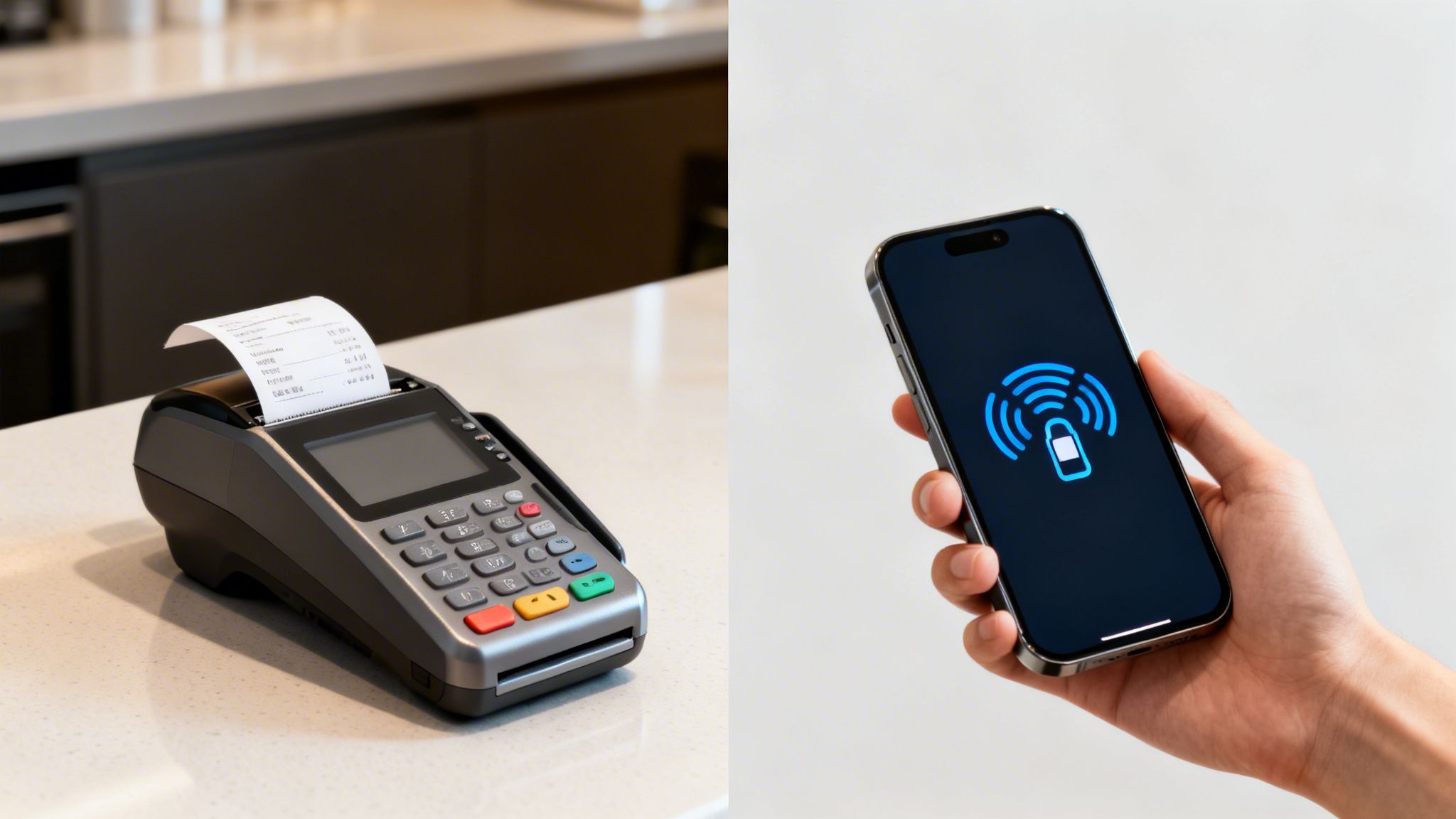
Choosing an EPOS POS system in Singapore comes down to one question. Do you want a traditional hardware setup or a modern, software-only approach? One is a fixed station; the other turns your phone into a payment terminal.
This choice shapes your setup speed, costs, and mobility.
Decoding Your POS System Options in Singapore
Picking a point-of-sale system is a massive decision for any local business. It dictates customer interactions and daily operations. Today's solutions have moved far beyond old, clunky cash registers.
The market is now split into two camps: traditional hardware and modern software. Each has unique strengths for different business types.
This shift is part of a larger trend. The Southeast Asian POS payment market is set to grow from 2,881.8 million in 2019 to 4,650.0 million by 2033. This growth is driven by widespread digital payment adoption. You can explore the Southeast Asia POS payment market trends on Allied Market Research.
Key Differences Between System Types
Understanding the core differences helps you match a solution to your business. This isn't just about comparing features; it's about finding the right operational fit. A system that works for a busy café could be a nightmare for a pop-up stall.
Feature | Traditional Hardware EPOS | Modern SoftPOS App (e.g., nashi) |
|---|---|---|
Primary Component | Dedicated terminal, printer, cash drawer | Your existing smartphone or tablet |
Upfront Cost | High (hardware purchase or lease) | Zero (uses your own device) |
Onboarding Speed | Days to weeks (hardware delivery/setup) | As little as one business day (digital setup) |
Mobility | Fixed to a counter or physical location | Completely mobile; sell anywhere |
Best For | Established retail/F&B with fixed checkout | Pop-ups, freelancers, mobile services |
The biggest shift is from owning dedicated payment hardware to using software on a device you already own. This drastically lowers the entry barrier for micro-businesses to accept card payments.
A hardware-based EPOS POS system in Singapore often includes deep inventory management and staff tracking. In contrast, a SoftPOS app like nashi focuses on simplicity and speed. Its goal is to help you take payments quickly.
Your specific business needs will point you to the right solution.
Traditional Terminals Vs Modern SoftPOS Apps
The classic choice for Singaporean businesses has been the dedicated hardware EPOS terminal. It bundles a card reader, receipt printer, and cash drawer into one unit. For years, this all-in-one setup was the standard for established merchants.
This traditional route often comes with hefty upfront hardware costs. You'll also likely face fixed monthly fees for software and support. The onboarding process can drag on for days or even weeks.
For a new business, these initial hurdles can be a significant roadblock.
The Rise of Software-First Solutions
SoftPOS (Software Point of Sale) apps are changing the game. They turn the smartphone you already own into a secure payment terminal. Apps like nashi use Tap-to-Phone technology, requiring no extra hardware.
This hardware-free model eliminates the initial investment and offers incredible flexibility. You can get your business approved and ready to accept payments in as little as one business day.
This gives you the power to take payments anywhere. You are no longer chained to a physical counter. It’s a game-changer for businesses that value mobility and speed.
Practical Trade-offs For Your Business
An epos pos system in Singapore is not a one-size-fits-all solution. Your business model, budget, and daily operations will determine the best fit.
Cost Structure
Traditional EPOS: Hardware can cost from 500 to over 2,000, plus ongoing monthly software fees.
SoftPOS App: The upfront hardware cost is zero. You pay a small fee per transaction with no monthly charges.
Setup Speed
Traditional EPOS: Setup can take days or weeks for hardware delivery, installation, and training.
SoftPOS App: Onboarding is digital and fast, often completed within one business day.
The real differentiator is the barrier to entry. SoftPOS removes the financial and time commitments that hardware demands, making it far more accessible for new and micro-businesses.
Hardware EPOS vs SoftPOS App: A Practical Comparison
This side-by-side comparison focuses on what truly matters for a small business owner in Singapore.
Decision Factor | Traditional Hardware EPOS | SoftPOS App (e.g., nashi) | Who It's Best For |
|---|---|---|---|
Upfront Investment | High (hardware purchase or lease) | Zero (uses your own smartphone) | Pop-ups, freelancers, new businesses |
Onboarding Time | Days or weeks | As little as one business day | Anyone needing to start fast |
Mobility | Fixed to a counter | Completely mobile, sell anywhere | Mobile services, event vendors |
Hardware | Multiple components required | None, just your phone | Minimalists, eco-conscious owners |
Feature Set | Comprehensive (inventory, staff mgmt) | Focused (fast payment acceptance) | Businesses prioritising simple payments |
Contract | Often requires long-term contracts | No lock-in, pay-as-you-go | Businesses valuing flexibility |
This breakdown shows that the "best" system is about finding the right tool for your specific job.
Functionality And Use Cases
Traditional terminals shine in high-volume, complex environments like busy restaurants or large retail shops. Their all-in-one design is perfect for a static checkout process. They are built for stability and deep integration into established workflows.
A SoftPOS app is the champion of agility. It’s ideal for a personal trainer, a pop-up market artisan, or a home baker. In these mobile scenarios, a full-blown epos pos system in Singapore is overkill.
f your primary goal is to accept card payments simply and securely, a focused app is smarter. To learn more about payment infrastructure, read our guide on how NETS Merchant Connect works for businesses.
Let's Compare the Top POS System Players in Singapore
Finding the right POS provider in Singapore requires cutting through marketing fluff. We’ll break down traditional players, all-in-one platforms, and new specialised apps. This will help you see who is the best fit for your business.
The market is a mix of old-school giants and nimble newcomers. Each is built for a different kind of business. Understanding their differences in cost, features, and support is key.
The Big Boys: Established Hardware-Centric Players
These are the powerhouses of the epos pos system Singapore scene. They offer robust, all-in-one setups for fixed locations. Their strength lies in their depth of features.
You get serious inventory management, sales analytics, and staff performance tracking. They’re perfect for businesses with complex daily operations.
This power comes with a high price tag. Expect significant upfront hardware costs and a binding monthly subscription. Setup involves on-site installation and can take days or weeks.
One dominant name is EPOS. They are Singapore's largest POS provider, serving over 6,000 clients since 2009. You can read more about EPOS's market leadership and solutions here.
The Agile Upstarts: Software-First Challengers
A new breed of software-first providers serves today's micro-businesses. Companies like HitPay and nashi prioritize flexibility and speed. They use tech that ditches the need for dedicated hardware.
These solutions are built for startups, pop-up stalls, and freelancers. They often run on a pay-as-you-go model with zero monthly fees. Onboarding is digital and typically completed within a single day.
They may not have the sprawling backend features of legacy systems, but that's the point. Their focus is on making payment acceptance as smooth and simple as possible.
A Head-to-Head Look at the Main Contenders
Let's compare them on what matters to a small business. We will look at setup speed, pricing clarity, and their ideal user. This is where the perfect fit for your operation will emerge.
Comparing Singapore's POS Providers
Provider Type | A Good Example | Getting Started | The Cost Structure | Perfect For… |
|---|---|---|---|---|
Legacy Hardware | EPOS, Qashier | Days to Weeks | Upfront Hardware + Monthly Subscription | Established Retail & F&B |
All-in-One Digital | HitPay | A Few Business Days | Transaction Fees + Optional Subscriptions | E-commerce & Retailers |
Specialised SoftPOS | nashi | About 1 Business Day | Transaction Fees Only (No Monthly Fees) | Mobile Services, Freelancers & Pop-ups |
The table reveals a classic trade-off: comprehensive features versus operational speed and agility. If you're leaning mobile, check our deep dive into the best mobile POS systems in Singapore for 2026.
Diving Deeper Into the Software Players
HitPay is a strong all-in-one digital payment platform. It's a solid choice for businesses with both online and in-person sales. It offers a broad toolkit, from payment links to a mobile POS app.
nashi, however, is laser-focused. It's built to let you accept simple, in-person contactless card payments using just your smartphone. This hardware-free model is perfect for micro-businesses that find all-in-one platforms too complex.
The difference is philosophy. HitPay aims to be a single stop for all payment needs. nashi excels as a specialised tool for mobile entrepreneurs.
Don't Get Caught Out: Unpacking the Hidden Costs
When picking an epos pos system Singapore provider, look beyond headline rates. Many low rates require a massive monthly sales volume. Small businesses often fall short and face higher fees.
Watch out for long-term contracts and hardware leasing agreements. These can lock you into a system that doesn’t grow with your business. Always read the fine print about cancellation policies.
True transparency is rare. Hunt for providers with clear, straightforward pricing. A simple, pay-as-you-go model is almost always the safest bet.
Frequently Asked Questions
1. Which POS provider is best for a new F&B business?For a new café, a system from Qashier or EPOS with integrated order management makes sense. For a food truck or market stall, a flexible SoftPOS app like nashi is more practical.
2. Do I need a system with inventory management?It depends on what you sell. A retail boutique needs it, but a personal trainer does not. A simple payment app is better for service-based businesses.
3. How does customer support differ between providers?Large providers use ticketing systems, which can be slow. Smaller companies often provide more direct, personal support for faster answers.
4. Can I switch providers easily?Moving from a software-only provider is easy with no contracts. Migrating from a hardware-based system can be difficult, especially with long-term leases.
Let's Get Real: Which POS System Wins in the Wild?
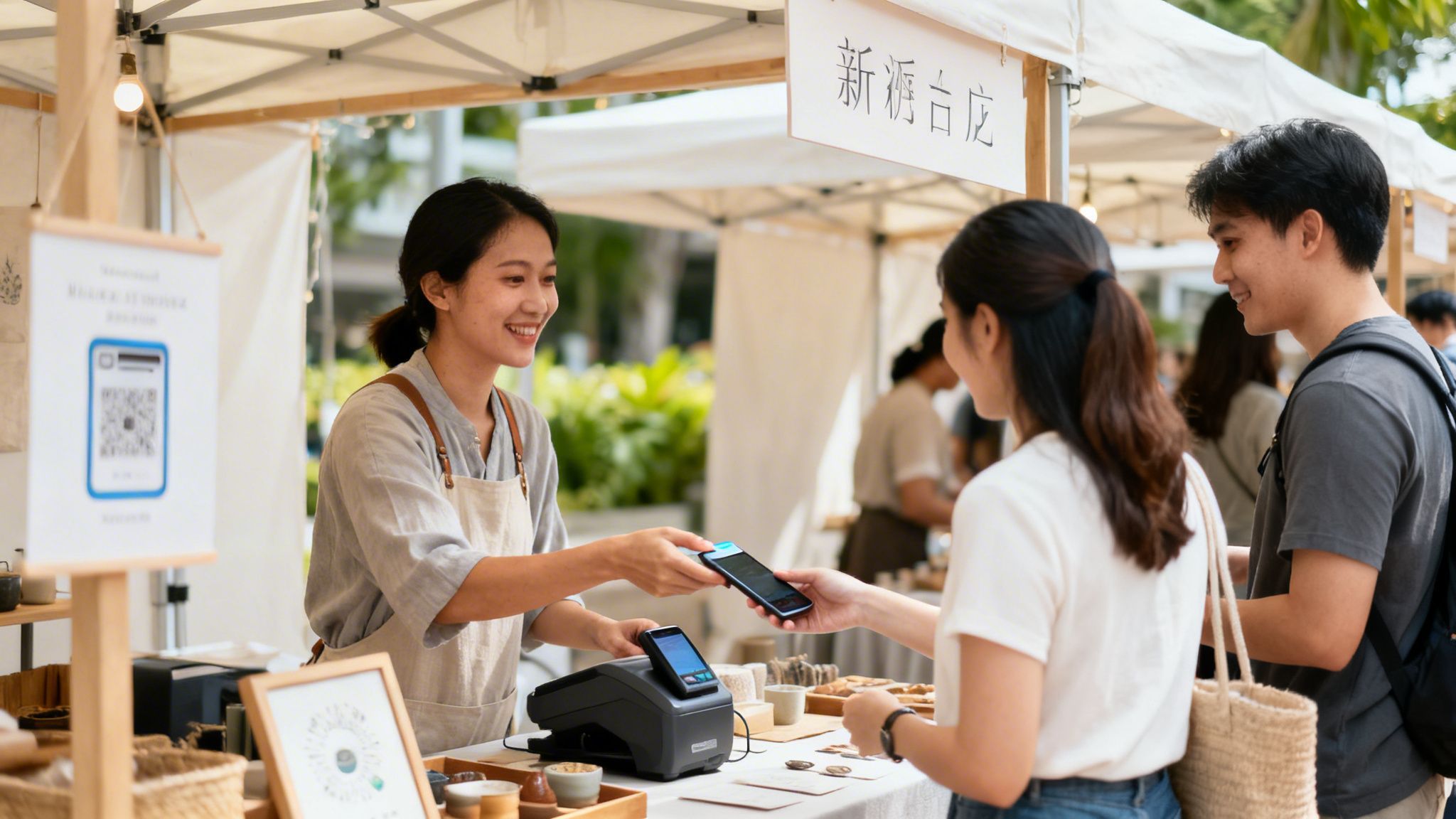
The best epos pos system Singapore offers isn't the one with the most features. It's the one that slots into your day-to-day without fuss. Let's look at real-life scenarios for small business owners in Singapore.
By examining what you actually do, we can pinpoint the right type of POS system.
Scenario 1: The Weekend Market Artisan
You sell handmade crafts at a pop-up market. You need speed, mobility, and zero setup hassle. A clunky terminal and cash drawer are out of the question.
A SoftPOS app like nashi is a game-changer. Your smartphone becomes your payment terminal. You can accept a credit card in seconds, right at your stall.
The Verdict: For pop-ups, a hardware-free SoftPOS app is the clear winner. Its instant setup, complete mobility, and pay-as-you-go model match the rhythm of a mobile business.
A traditional hardware system would be a nightmare. It's too slow to set up, a pain to transport, and loaded with overkill features.
Scenario 2: The Neighbourhood Boutique
Imagine a boutique in an HDB estate selling clothing and accessories. It has a permanent home, complex inventory, and a few staff. Smooth, efficient operations are the priority, not mobility.
Here, a simple hardware-based epos pos system in Singapore makes sense. The ability to scan barcodes, track stock levels, and pull sales reports is invaluable. It becomes the shop's command centre.
A SoftPOS app could handle payments but lacks integrated inventory and staff management. The owner would need separate tools to track what's selling.
Use Case Comparison At A Glance
Business Scenario | Key Priority | Ideal POS Solution | Why It Wins |
|---|---|---|---|
Weekend Market | Speed & Mobility | SoftPOS App (e.g., nashi) | Zero hardware, instant setup |
Boutique Shop | Inventory & Operations | Simple Hardware EPOS | Integrated stock and sales tracking |
Personal Trainer | On-the-Go Payments | SoftPOS App (e.g., nashi) | Accept payments anywhere |
Food Truck | Durability & Simplicity | SoftPOS App (e.g., nashi) | Rugged (it's your phone), fast |
Scenario 3: The Mobile Personal Trainer
A personal trainer meets clients all over the island. Their business is 100% mobile. They need a professional way to get paid right after a session.
This is another perfect match for a SoftPOS app. The trainer can pull out their phone and accept a client’s contactless card payment on the spot. It's secure, professional, and eliminates invoicing hassles. To learn about the tech, read how Tap to Pay on iPhone is changing small business payments.
A full hardware system is a non-starter for a business built on agility.
This mobile payment trend is huge. The Asia-Pacific POS terminals market is projected to grow from USD 23.5 billion in 2024 to USD 53.01 billion by 2033. See the full Asia-Pacific POS market forecast on Market Data Forecast.
When you break down your daily workflow, the right choice becomes clear. Pick the tool built for the job you actually do.
Why nashi Is The Smart Choice For Micro Businesses
Traditional POS systems feel outdated for modern small businesses. They present a wall of complexity, confusing costs, and unnecessary long-term contracts. You need a solution that's simple, transparent, and fast.
This is where nashi comes in. It's designed for the entrepreneurs that the payments industry has often overlooked.
Designed For Simplicity, Not Complexity
nashi uses Tap-to-Phone technology to turn your smartphone into your only hardware. There are no machines to lease and no long-term contracts. This hardware-free approach strips away unnecessary costs and headaches.
The sign-up process is digital and quick. Most businesses are approved and ready to accept payments in as little as one business day. You can start earning money almost immediately.
nashi’s real power is its laser focus. Instead of bloated features, it perfects one task: taking seamless, in-person contactless card payments.
This simplicity makes nashi a perfect partner for your existing PayNow QR. It lets you accept international cards from tourists or handle larger sales.
A Financial Model That Puts You First
A major headache with any epos pos system in Singapore is confusing pricing. nashi offers a model that is completely clear and fair.
There are zero monthly fees, no hidden charges, and no surprises. You only pay a simple, transparent fee per transaction. This pay-as-you-go approach means your costs scale directly with your sales.
Look at the difference in financial commitment:
Cost Factor | Traditional EPOS System | nashi SoftPOS App |
|---|---|---|
Hardware Cost | Often $500 -$ 2,000+ | $0 (it's your phone!) |
Monthly Fees | Yes, typically required | None |
Contract | Often 12-24 months | No lock-in |
This flexibility is a game-changer for businesses that need to stay lean.
Who Is nashi Perfect For?
nashi is built for the dynamic, on-the-move entrepreneur. Its clean design serves specific businesses better than any clunky, all-in-one system. It's the smart choice for:
Pop-up Stores & Market Vendors: Set up in minutes and accept card payments anywhere.
Mobile Service Providers: Get paid on the spot, right after a session.
Food Trucks & Event Sellers: A tough, simple solution that works wherever you are.
Freelancers & Consultants: Look professional by accepting card payments during meetings.
For these businesses, features like inventory management are just noise. nashi eliminates clutter to deliver exactly what you need: a fast, reliable way to get paid.
Frequently Asked Questions
1. Is nashi a full POS system? No, and that’s intentional. nashi is a specialised SoftPOS app designed to do one thing perfectly: accept in-person contactless card payments with just your phone.
2. How does nashi work with PayNow? They are the perfect team. Use PayNow for fee-free local transactions. nashi steps in to help you accept card payments from international tourists or for larger sales.
3. Are there any hidden fees or contracts? Absolutely not. nashi has no monthly fees, no setup costs, and no lock-in contracts. It's built to be completely transparent and flexible for small businesses.
FAQ: Your EPOS POS System Questions Answered
Choosing the right epos pos system in Singapore can be confusing. Here are straight-to-the-point answers to common questions from small business owners.
Is A Simple POS App Enough For My Business?
For most micro and small businesses, yes. If your main goal is to accept card payments without complex inventory or staff management tools, an app is the smartest choice. A full-blown EPOS system is often overkill unless you have multiple storefronts or massive stock lists.
What Exactly Is SoftPOS Or Tap To Phone?
SoftPOS (or Tap-to-Phone) technology turns your smartphone into a secure payment terminal. Using your phone's built-in NFC, it can accept contactless payments from cards and digital wallets. This eliminates the need for any extra hardware like card readers.
How Quickly Can I Start Accepting Payments?
A traditional hardware EPOS system can take days or weeks to set up. In contrast, a software-only solution like nashi has a fully digital sign-up. Most users are approved and ready to take payments in as little as one business day.
Can I Use A POS App And PayNow Together?
Absolutely. This is a great strategy for small businesses in Singapore. Use PayNow for smaller, fee-free local transactions. A SoftPOS app then fills the gap, allowing you to accept credit and debit cards from tourists or for larger sales.
Ready to accept card payments without the hardware headache? nashi turns your phone into a powerful payment terminal in just one day. Get started with a simple, transparent, and flexible solution built for your hustle.


